What Soccer Camps Offer Young Players
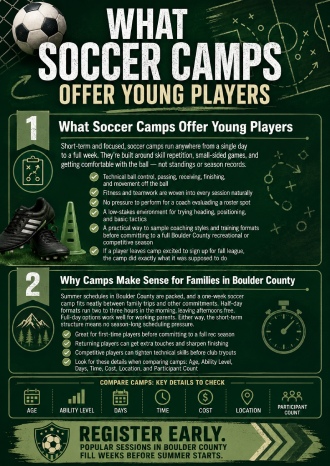
Short-term and focused, soccer camps run anywhere from a single day to a full week. They're built around skill repetition, small-sided games, and getting comfortable with the ball – not standings or season records.
Players work on technical ball control, passing, receiving, finishing, and movement off the ball. Fitness and teamwork are woven into every session naturally, not treated as separate drills. There's no pressure to perform for a coach who's evaluating a roster spot.
For kids who've never played organized soccer, that low-stakes environment makes a real difference. A child can try heading, positioning, and basic tactics without worrying about letting a team down.
Camps also give families a practical way to sample coaching styles and training formats before committing to a full Boulder County recreational or competitive season. If a player leaves camp excited to sign up for fall league, the camp did exactly what it was supposed to do.
Why Camps Make Sense for Families in Boulder County
Summer schedules in Boulder County are packed, and a one-week soccer camp fits neatly between family trips and other commitments. Half-day formats run two to three hours in the morning, leaving afternoons free. Full-day options work well for working parents. Either way, the short-term structure means no season-long scheduling pressure.
The format also suits different player types. A six-year-old trying soccer for the first time gets a low-stakes introduction before committing to a fall rec season. A returning player heading into middle school can grab extra touches and sharpen finishing. Competitive players eyeing club tryouts use camp weeks to tighten technical skills under focused coaching.
When comparing programs, look for labeled details: Age, Ability Level, Days, Time, Cost, Location, and Participant Count. Those quick specs let families match the right camp to the right kid fast.
Register early. Popular sessions in Boulder County fill weeks before summer starts.
What To Expect From a Typical Soccer Camp Day
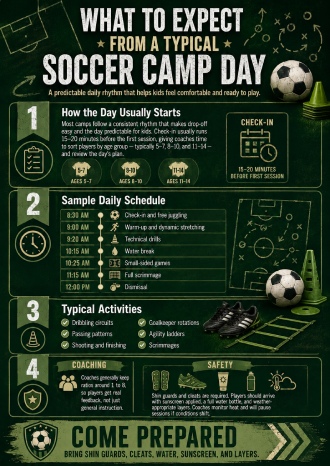
Most camps follow a consistent rhythm that makes drop-off easy and the day predictable for kids. Check-in usually runs 15–20 minutes before the first session, giving coaches time to sort players by age group – typically 5–7, 8–10, and 11–14 – and review the day's plan.
A sample daily schedule might look like this:
8:30 AM – Check-in and free juggling
9:00 AM – Warm-up and dynamic stretching
9:20 AM – Technical drills
10:15 AM – Water break
10:25 AM – Small-sided games
11:15 AM – Full scrimmage
12:00 PM – Dismissal
Typical activities include dribbling circuits, passing patterns, shooting and finishing, goalkeeper rotations, agility ladders, and scrimmages.
Coaches generally keep ratios around 1 to 8, so players get real feedback, not just general instruction.
Safety expectations are straightforward. Shin guards and cleats are required. Players should arrive with sunscreen applied, a full water bottle, and weather-appropriate layers. Coaches monitor heat and will pause sessions if conditions shift.
A Soccer Camp Can Be the Perfect First Step
For Boulder County families weighing their options this summer, there's a genuinely practical case for starting with a camp rather than jumping straight into a full recreational season. Short-term programs give kids room to build ball control, test their comfort with the sport, and figure out whether they actually enjoy it before committing to weekly practices and game schedules. Older players chasing more competitive development get real benefits too. Compare logistics carefully, check that the age group and ability level match your child's experience, and look at location and cost side by side. Spots at popular summer camps fill up fast, so registering early makes a real difference. If a program lines up with your family's schedule and goals, sign up now rather than waiting.